OTC Media Planning for 2027: From Efficient Reach to Meaningful Influence
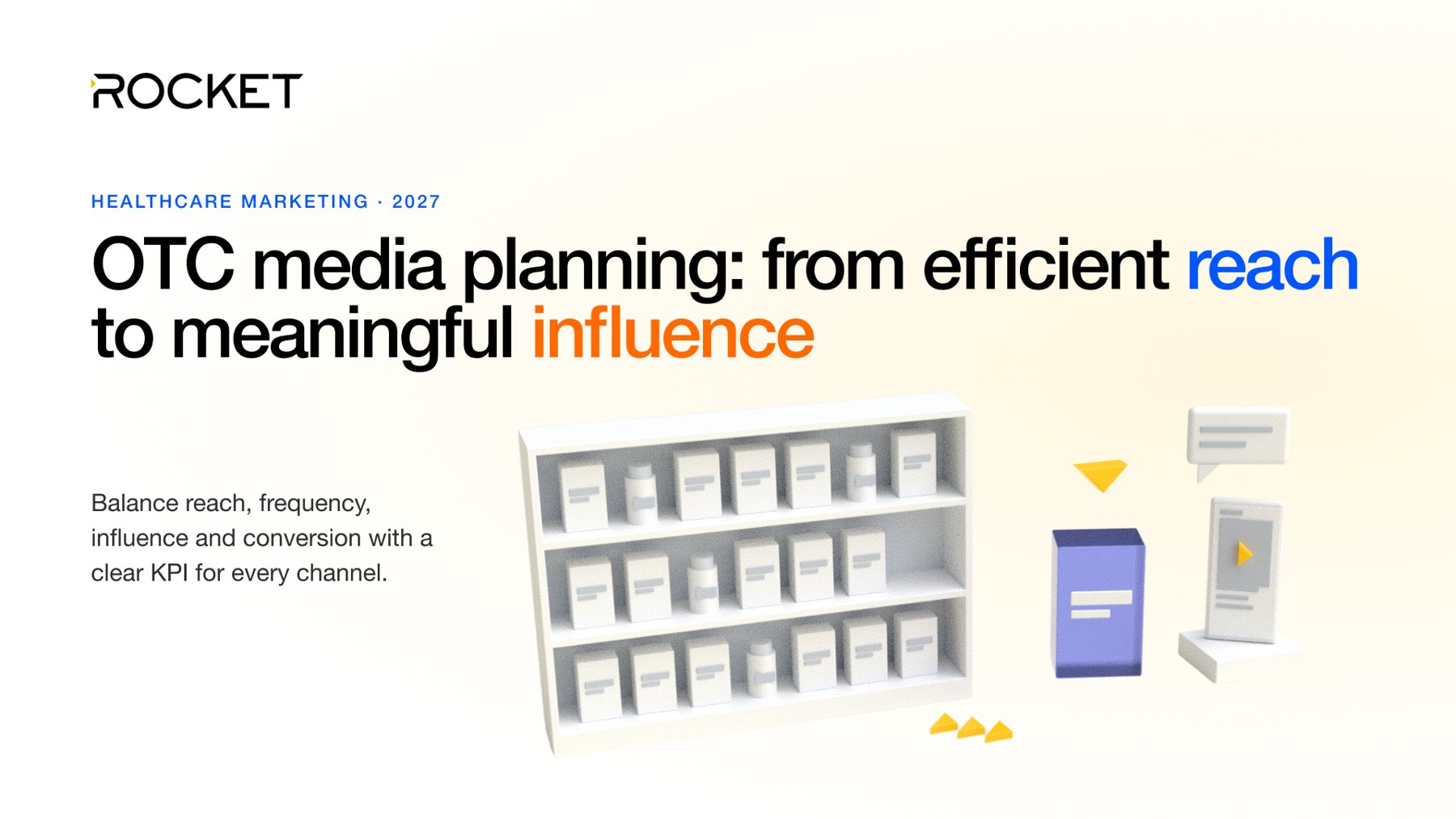
OTC media planning is evolving as consumer health brands rethink how they build awareness, earn trust and convert demand. Digital channels offer more opportunities to reach consumers, but greater exposure does not automatically translate into stronger brand preference or better business results.
Key takeaways
- Reach and frequency serve different purposes. Broader reach builds awareness, while well-managed frequency reinforces brand presence.
- Influence goes beyond exposure. Attention, relevance and trust play a critical role in shaping consumer decisions.
- Media effectiveness depends on the right KPIs. Each channel should be evaluated according to its role in the consumer journey.
- Trust and compliance go hand in hand. OTC brands need credible communication that meets pharmaceutical advertising requirements.
- An integrated approach strengthens performance. Connecting awareness, influence and demand capture creates a more effective media strategy.
For pharmaceutical marketers preparing their 2027 plans, the challenge is to balance reach, frequency and influence while ensuring every channel contributes to a clear objective.
The opportunity is not simply to buy more impressions. It is to reach the right audiences, deliver relevant messages and build confidence when consumers are making healthcare decisions.
Why OTC Media Planning Needs a New Approach
Consumer health brands are increasingly adopting marketing practices associated with fast-moving consumer goods (FMCG). This includes investing in broad brand awareness, responding to seasonal demand and strengthening their presence across digital touchpoints.
Opella, for example, has reportedly shifted approximately 60% of its paid media investment to digital channels, reflecting the growing importance of search, social media and retail media in consumer healthcare.
However, capturing existing demand is only part of the equation. Brands also need to establish familiarity before consumers actively search for a solution.
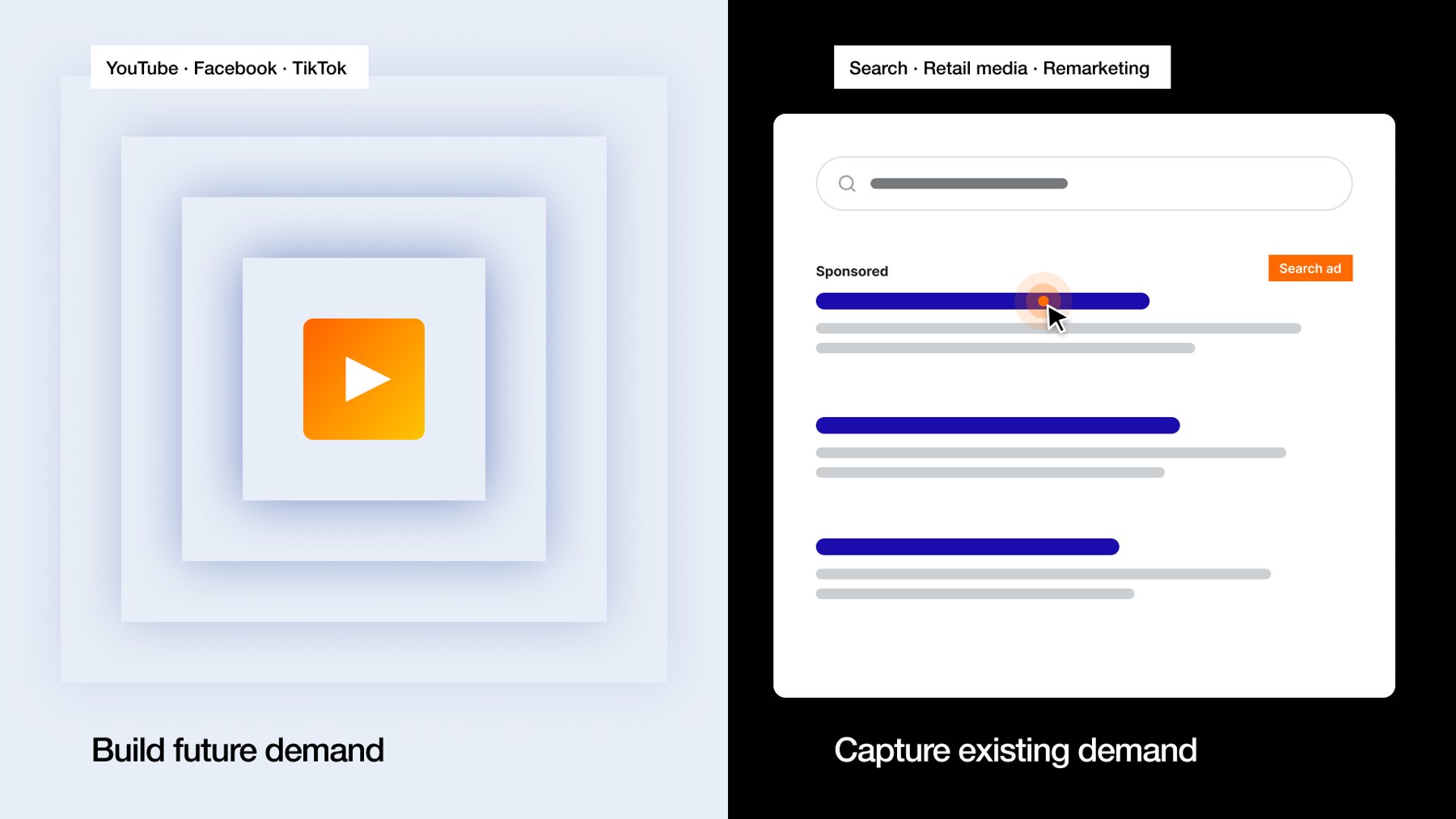
For OTC marketers, this creates two complementary priorities:
- Build future demand: Maintain brand visibility and recognition before a healthcare need arises.
- Capture existing demand: Provide relevant, accessible information when consumers begin exploring their options.
An effective media plan should support both priorities rather than concentrating the entire budget on short-term conversion.
Reach and Frequency: Finding the Right Balance
Reach remains essential for brand growth, but repeatedly showing advertisements to the same audience does not guarantee proportionate improvements in performance.
Research discussed by the LinkedIn B2B Institute, drawing on earlier Nielsen findings, illustrates how additional advertising exposure can produce diminishing returns. Although this evidence is not specific to OTC pharmaceuticals, it highlights an important planning consideration: increasing frequency should not come at the expense of reaching potential new customers.
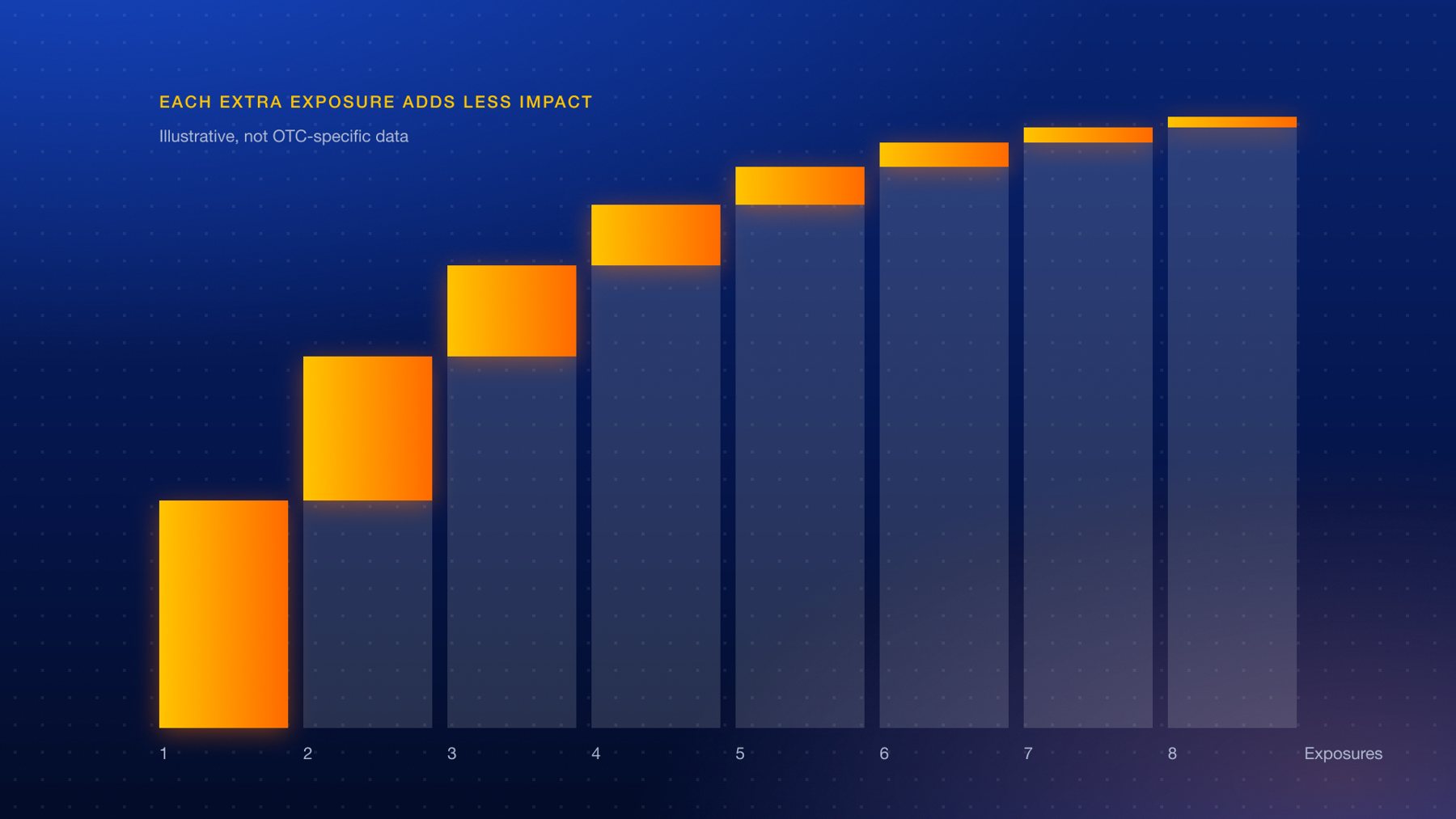
The objective is not to minimize frequency. It is to establish an appropriate balance based on campaign goals, audience behavior and market conditions.
For awareness campaigns, marketers should prioritize incremental reach while monitoring how frequently audiences encounter the message. For remarketing and seasonal campaigns, additional exposure may be valuable when supported by clear audience intent and relevant messaging.
Rather than applying a universal frequency cap, brands should test different levels of exposure and evaluate their impact on awareness, consideration and conversion.
Beyond Reach: Why Influence Matters
Reaching consumers is only valuable when the message has an opportunity to shape their decisions.
Boston Consulting Group (BCG) identifies three important factors behind the influence of marketing touchpoints:
- Attention: Does the content capture and maintain consumer interest?
- Relevance: Does the message address a need or concern at the right moment?
- Trust: Does the consumer consider the information and its source credible?
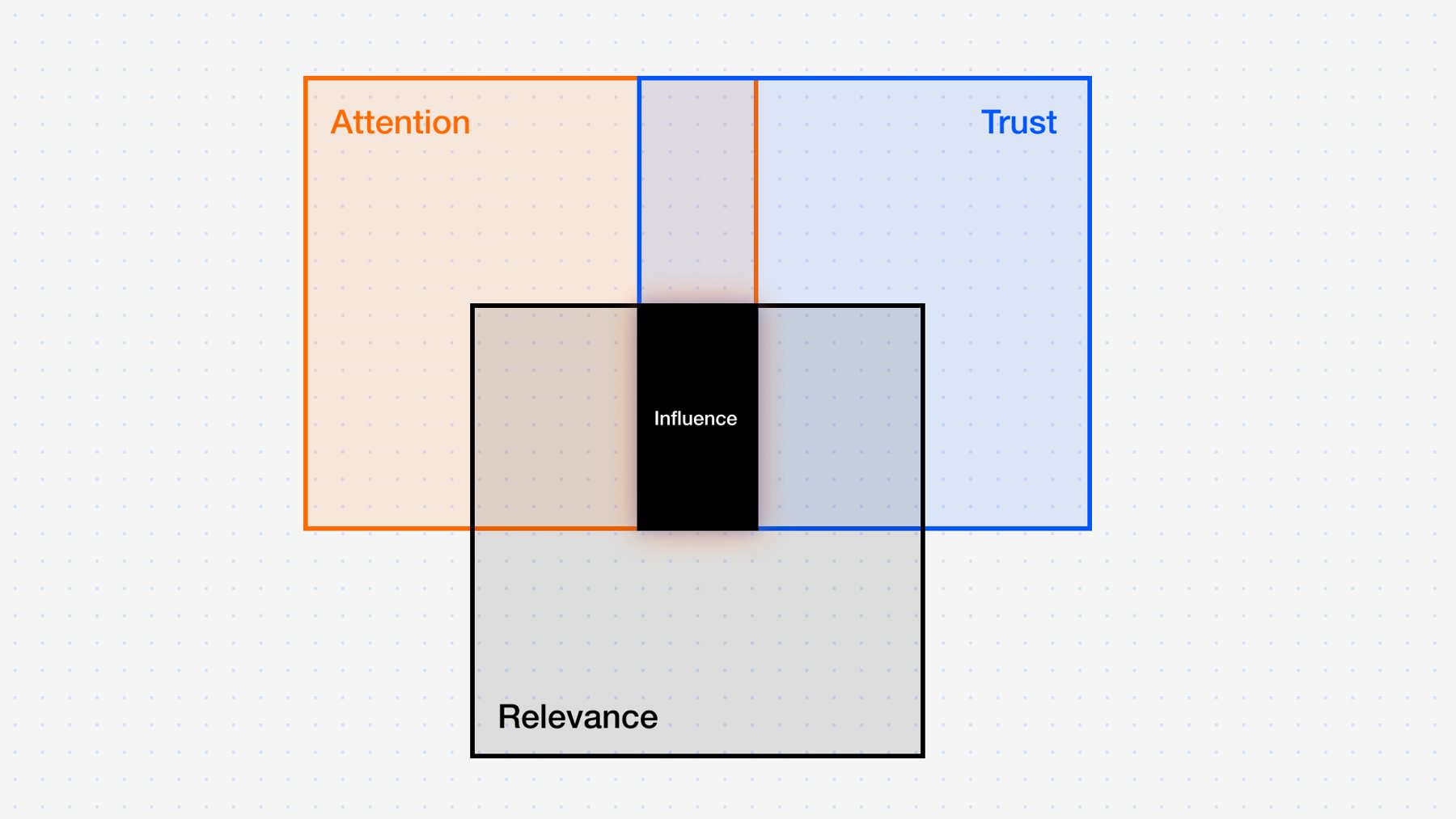
These factors are particularly important in healthcare, where consumers may seek reassurance and reliable information before choosing a product.
A broad-reach video campaign can introduce a brand to new audiences, while search results, educational content and credible creators can help consumers explore available options.
The effectiveness of each touchpoint depends on the specific consumer journey. A search advertisement may be highly influential when it directly addresses a user’s needs, while educational video content may be more useful when consumers are still developing an understanding of a health concern.
For OTC brands, the implication is clear: media investment should be evaluated not only by how many people it reaches, but also by its ability to support informed consideration and brand preference.
YouTube and Digital Video: Match the Format to the Objective
Digital video can support different objectives throughout an OTC media plan, from broad awareness to deeper product understanding.
Google’s guidance distinguishes between several YouTube campaign approaches:
- Efficient Reach: Designed to expand unique audience reach efficiently, with reach and CPM as key performance indicators.
- Non-skippable Reach: Supports brand awareness through messages delivered in full, with attention to reach, watch time and brand lift.
- Target Frequency: Helps maintain planned exposure levels, particularly during important campaign periods.
- Video View Campaigns: Focus on generating views and consideration through engaging video content.
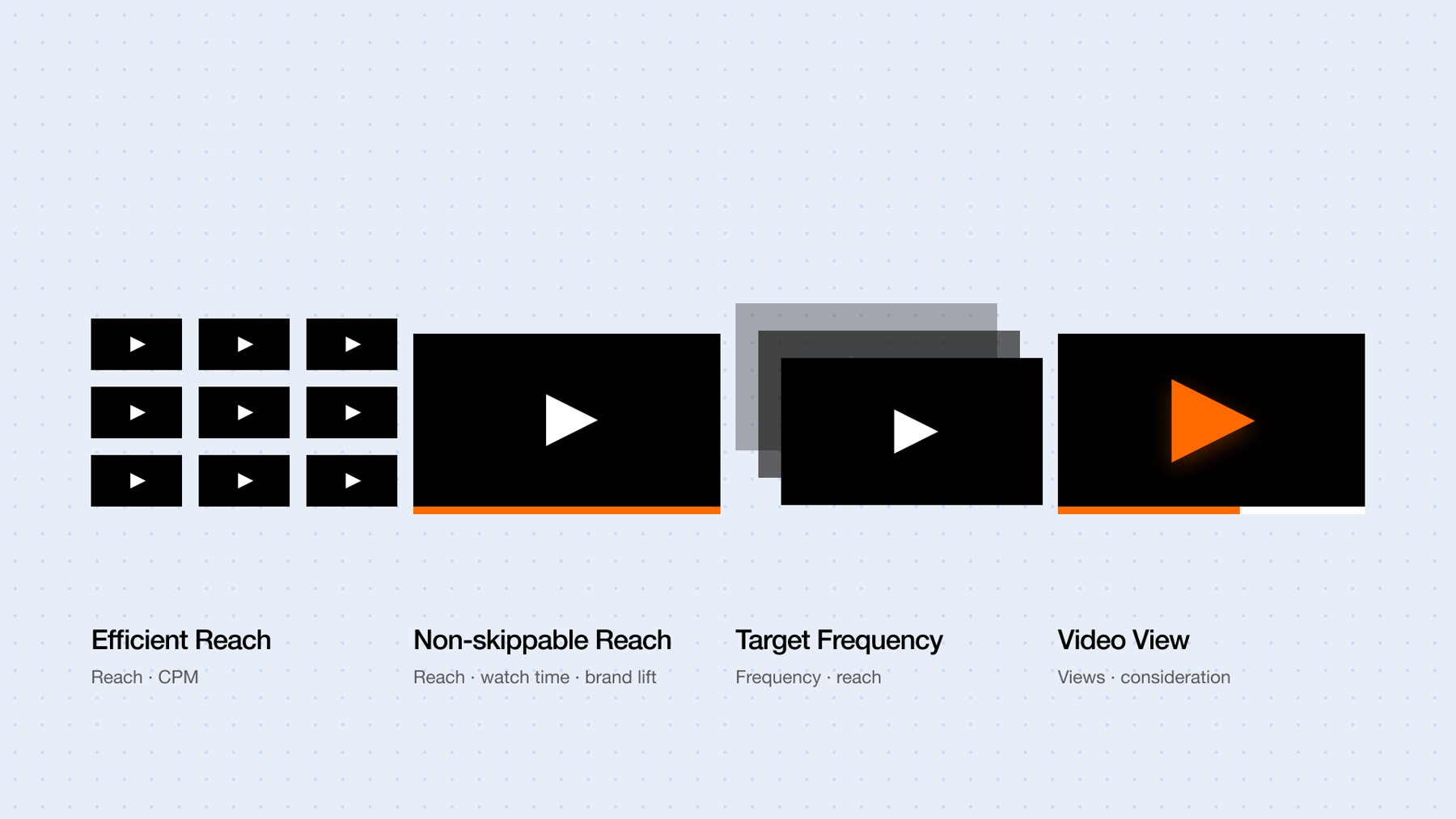
The important distinction is how performance is measured.
An awareness campaign should not be judged primarily by cost per acquisition, just as a consideration campaign should not be evaluated solely on the number of impressions delivered.
Creative development also matters. Brands should adapt video assets for different viewing environments, including YouTube Shorts, mobile and connected TV, rather than relying on a single format across every placement.
A clear connection between campaign objectives, creative formats and KPIs makes media investment easier to evaluate and optimize.
KOL Marketing in Pharma: Credibility and Compliance
Creators and key opinion leaders (KOLs) can help brands communicate complex topics in accessible ways. However, pharmaceutical marketing requires greater care than many other consumer categories.
In Vietnam, advertising for medicines is subject to specific legal requirements. Campaigns must consider product eligibility, approved advertising content, promotional claims and restrictions concerning healthcare professionals.
For OTC brands, creator selection should therefore prioritize credibility, audience relevance and regulatory suitability rather than follower count alone.
Before launching a campaign, marketers should ensure that:
- Product claims are consistent with the applicable approved advertising content.
- Creators understand the boundaries of permitted communication.
- Sponsorships and commercial relationships are disclosed appropriately.
- Content and creative assets undergo medical, regulatory and legal review before publication.
Educational content and product advertising should also be clearly distinguished. In particular, the use of doctors, pharmacists or other healthcare professionals in medicine advertising requires careful assessment against applicable restrictions.
The objective is to build consumer confidence through responsible communication, without compromising compliance.
A Four-Part Framework for OTC Media Planning
To translate these principles into practical planning, Rocket Group proposes a framework built around four complementary media functions.
These functions are not intended to represent a rigid, sequential consumer journey. They can operate simultaneously, with investment adjusted according to brand maturity, seasonality and campaign objectives.
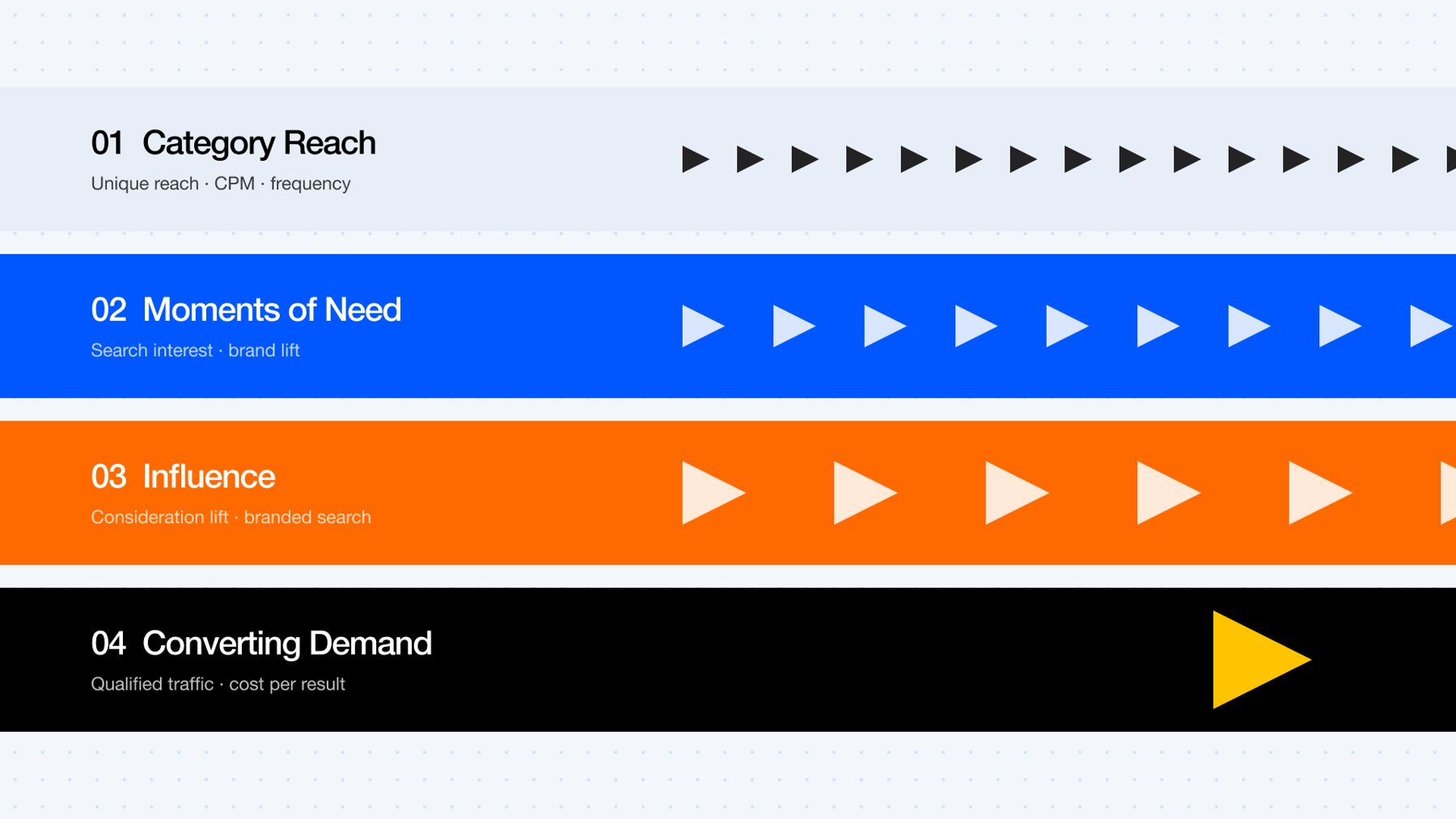
| Media function | Strategic role | Example channels | Key KPIs |
|---|---|---|---|
| 1. Category Reach | Build awareness before a need arises | YouTube, Facebook, TikTok | Unique reach, CPM, frequency |
| 2. Moments of Need | Increase relevance during seasonal or demand-driven periods | Search, seasonal video and social campaigns | Search interest, brand lift, incremental reach |
| 3. Influence | Strengthen understanding, credibility and preference | Educational content, compliant creators, video | Engagement quality, consideration lift, branded search |
| 4. Converting Demand | Help consumers take appropriate action when actively exploring options | Google Search, permitted remarketing and retail touchpoints | Qualified traffic, conversion rate, cost per result |
The framework helps marketers assign a clear purpose to each investment rather than expecting every channel to deliver the same outcome.
For example, a seasonal OTC campaign might use YouTube to establish broad awareness, search advertising to address active information needs and educational content to support consideration. These activities can reinforce one another without requiring consumers to follow a fixed sequence.
Performance should be reviewed across the overall media mix, using available measures such as brand lift, search trends and conversion data. Where sufficient data and resources exist, marketing mix modeling can provide additional insight into incremental business impact.
Importantly, budget allocation should remain flexible. The right balance depends on each brand’s objectives, competitive position and evidence of channel effectiveness.
Frequently Asked Questions About OTC Media Planning
Why are OTC brands adopting FMCG media strategies?
OTC brands increasingly use broad-reach advertising, seasonal campaigns and digital touchpoints to build familiarity before purchase needs arise. However, pharmaceutical marketing must also account for healthcare-specific consumer behavior and advertising regulations.
What is the ideal advertising frequency for OTC campaigns?
There is no universal frequency target. The appropriate level depends on the campaign objective, audience and creative execution. Brands should monitor incremental reach, frequency and performance outcomes to identify diminishing returns.
How should YouTube campaigns be measured?
Awareness campaigns should prioritize reach, CPM and relevant brand-lift measures. Video View Campaigns focus more on views and consideration. Each campaign should be evaluated against the objective it was designed to achieve.
Can OTC brands use KOLs in Vietnam?
Yes, subject to applicable advertising requirements and restrictions. Brands should verify claims, review creator content and obtain appropriate legal and regulatory approval before publication.
How can OTC brands improve media ROI?
Start by assigning a clear role and KPI to every channel. Balance brand building with demand capture, test reach and frequency, and evaluate how different touchpoints contribute to business outcomes rather than optimizing each platform in isolation.
Planning your OTC media strategy for 2027? Rocket Group’s digital media team can help you develop an integrated approach to audience reach, content, channel selection and performance measurement.
Sources
- It's Time for Marketers to Move Beyond the Linear Funnel — Boston Consulting Group (BCG), 2025
- Best Practices for Awareness and Consideration Video Campaigns — Google, n.d
- Reach Maximalism — LinkedIn B2B Institute, n.d
- How Consumer Healthcare Brands Are Adapting FMCG Media Strategies — Glossy, October 2026
- Vietnam Drug Advertisement and Promotion Rules — D.L., January 27, 2026
Want this applied to your brand?
Tell us the problem. We come back with a point of view, a scope and a number — usually within two working days.