BRAND EXPERIENCE: BUILDING A GLOBAL TECHNOLOGY BRAND
A company may have a highly skilled engineering team, advanced technology and a proven track record of delivering complex projects. But are these strengths enough to convince international clients to choose them?
In reality, clients often form their first impressions long before the initial meeting. A company’s website, corporate profile, office environment and the way its people present themselves all shape how potential clients perceive the business.
This was exactly the challenge datum consulting faced as it expanded across multiple markets. Through its collaboration with Rocket Group, the company developed a cohesive brand experience system, bringing a consistent brand language to every touchpoint – from visual identity and digital platforms to office environments and people.
1. Why do technology companies need to invest in brand experience?
As competition intensifies across Cloud, Data and AI, technical capabilities are no longer the only factors influencing client decisions. In the B2B sector especially, branding plays a critical role in building trust and positioning a company as a credible partner for major projects.
According to Gartner, B2B buyers spend only around 17% of their buying journey meeting potential suppliers face-to-face. Most of the remaining time is spent researching, comparing options, and discussing potential solutions internally.
This means clients often encounter a brand long before they meet its sales team. An unprofessional website, inconsistent corporate profile, or visual identity that fails to reflect the company’s actual scale can influence how potential clients perceive its capabilities.
The challenge is even greater for technology companies, as their products and services are often intangible. Clients cannot physically experience a Cloud infrastructure or AI model before signing a contract. Instead, they look for tangible signals of professionalism, scale, and credibility.
Therefore, Brand Experience goes beyond creating visually appealing designs. It is about communicating a company’s capabilities and building trust consistently across every brand touchpoint.
2. Datum consulting: The challenge of building a global brand image
Founded in 2017 in Auckland, New Zealand, Datum Consulting is a technology consulting and digital transformation company specializing in Cloud, Data & AI and Software solutions.
The company operates across four countries – New Zealand, Australia, Vietnam and the Philippines – with a team of more than 220 technology professionals, including over 70 certified Cloud specialists.
Datum primarily serves clients in the BFSI sector (Banking, Financial Services and Insurance), an industry where security, stability and delivery capabilities are essential when selecting a technology partner.
With operations spanning multiple markets, Datum needed a brand system that could address three key requirements simultaneously:
- Consistency: Maintain a unified brand image across all offices and markets.
- Differentiation: Communicate the company’s pioneering spirit in technology and digital transformation.
- Credibility: Establish a professional image that reflects its scale and meets the expectations of major enterprise clients.
These requirements became the foundation for Rocket Group’s development of a comprehensive brand identity and experience system for Datum.
3. Building a consistent brand identity across every touchpoint
Rather than developing individual brand assets in isolation, Rocket started with the core elements of Datum’s identity, then translated them into comprehensive Brand Guidelines to ensure consistency throughout implementation.
The hexagonal symbol – A distinctive visual identity
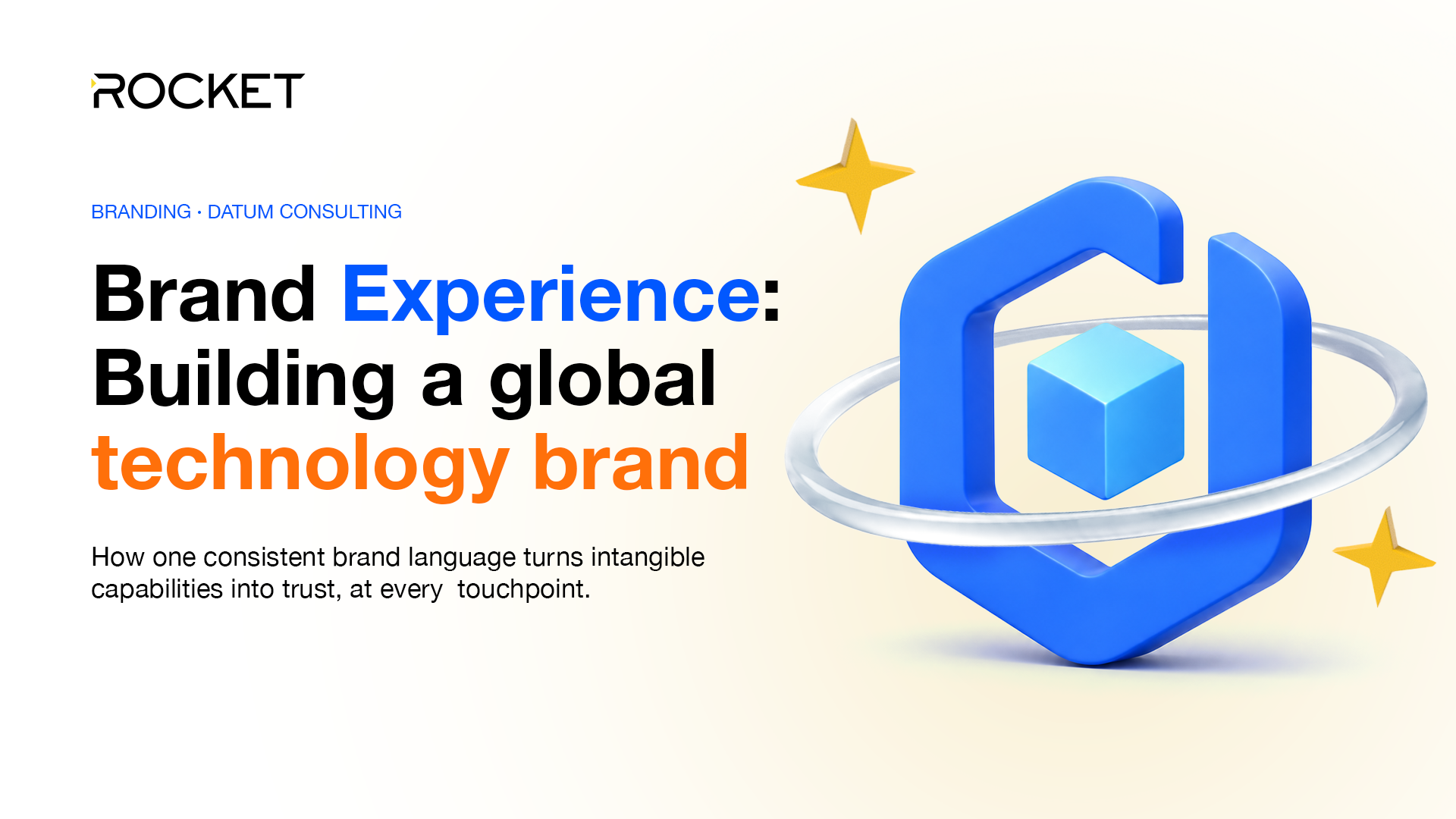
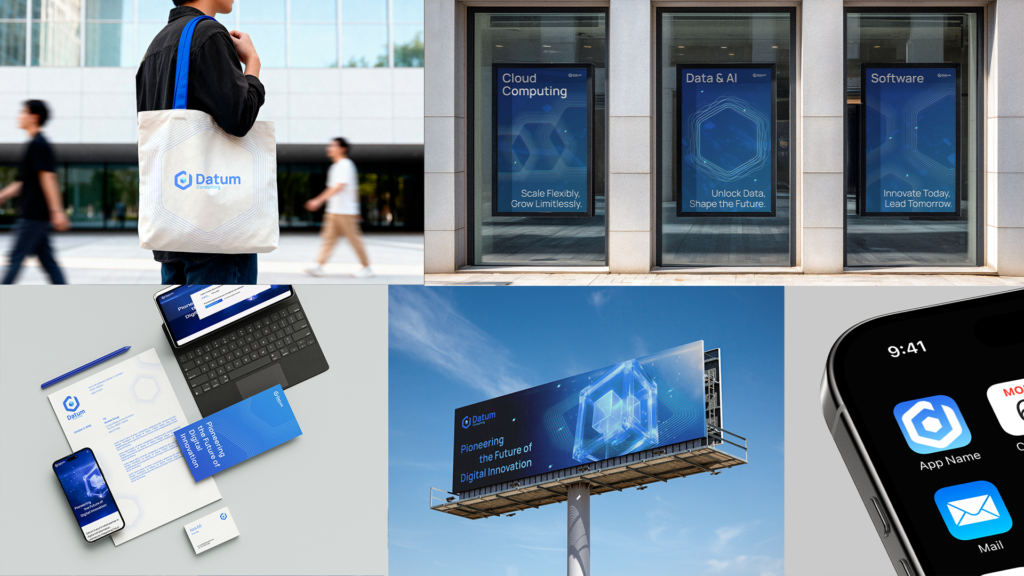
Datum’s logo features an interlocking hexagonal symbol, inspired by data structures and modular components within technology systems.
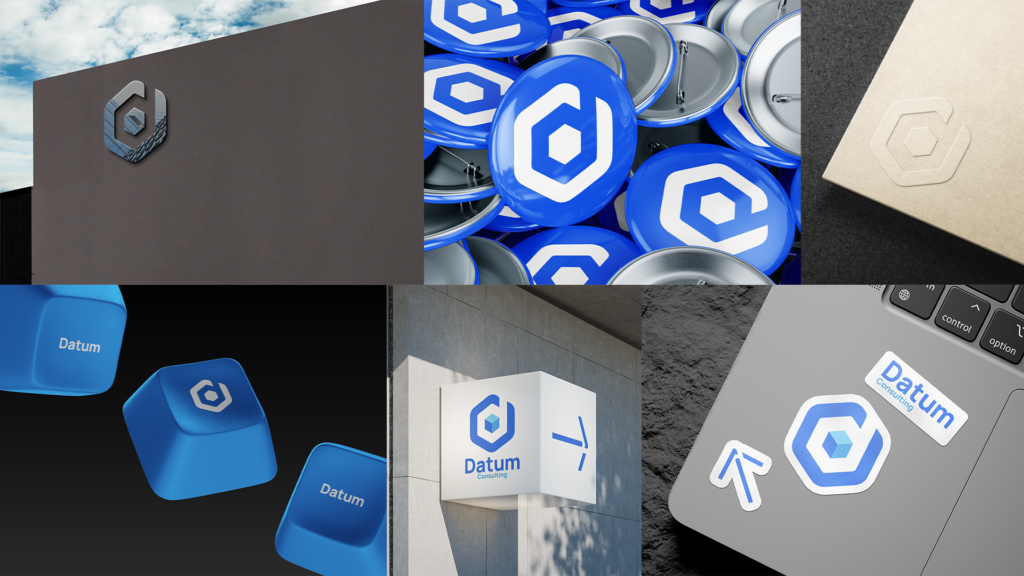
Beyond the logo itself, this geometric element was extended into patterns, icons, and wayfinding graphics. This allows the brand to remain recognizable even without the Datum wordmark.
Electric blue – Connecting technology and finance
Blue was chosen for its natural association with both industries at the heart of Datum’s business: technology and banking.
The brighter shade of blue, combined with lighting effects and visual depth, creates a modern appearance while retaining the sense of trust and reliability expected in the financial sector.
A consistent identity across digital and physical applications
The visual identity was implemented across a wide range of brand touchpoints:
- Digital: Website, mobile interfaces, social media and favicon.
- Corporate Collateral: Business cards, folders, and branded documents.
- Merchandise: Apparel, caps, bags, mugs, and office accessories.
- OOH & Events: Billboards, banners, event stages, and exhibition booths.
Each application follows the same visual language, making Datum recognizable whether clients encounter the brand online or in person.
4. Brand experience goes beyond visual identity: offices and people matter too
A global brand system cannot rely solely on consistency across websites and marketing materials. The physical office environment and the way employees represent the company must also reflect the same brand standards.
For Datum, Rocket extended the visual identity into the workplace, covering building facades, reception areas, meeting rooms, wayfinding signage, employee ID cards, and uniforms.
The Office – A tangible reflection of business scale
For banking and financial services clients, visiting an office and meeting the team are often important parts of the partner evaluation process.
By bringing the same visual standards to its Ho Chi Minh City office as those used across its other locations, Datum creates the impression of one unified, professional organization, despite operating across four countries.
People – An integral part of the brand experience
In technology services, people are at the heart of service delivery. As a result, uniforms, employee ID cards, and workplace environments all contribute to how the company’s culture and identity are experienced.
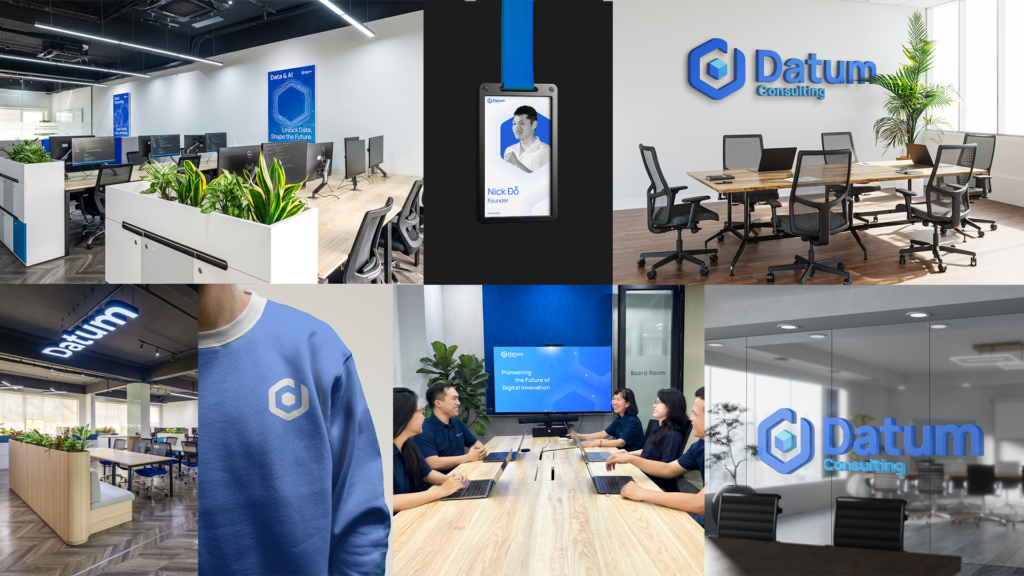
These elements also play an important role in Employer Branding. A professional and consistent workplace experience helps candidates better understand the organization they may become part of, while strengthening employees’ sense of pride in the brand.
5. Key brand experience lessons for technology companies
The Datum Consulting project highlights the difference between fragmented brand execution and a cohesive, system-driven Brand Experience.
Instead of creating individual assets whenever a need arises, companies should start with brand positioning and identity guidelines, then apply them consistently across every touchpoint.
Here are several key considerations for technology companies:
- Audit the first points of contact: Websites, LinkedIn, corporate profiles, emails, and presentation decks are among the first channels potential clients use to evaluate a business.
- Develop clear Brand Guidelines: Ensure that every office and partner can implement the brand consistently without requiring individual approval for every asset.
- Establish distinctive brand elements: A recognizable shape, pattern, or color palette can become a signature visual asset when applied consistently.
- Extend the brand experience: Include offices, uniforms, and events in the brand investment strategy rather than focusing exclusively on external communications.
More importantly, Brand Experience should be evaluated through measurable indicators, including brand awareness, the rate at which a company is invited to the evaluation stage, and the quality of job applicants.
Conclusion: A strong brand helps businesses be recognized for their true capabilities
A technology company may have strong delivery capabilities, but an inconsistent brand image can make it difficult for clients to fully recognize its scale and value.
The Datum Consulting case study demonstrates that Brand Experience should be built across four interconnected layers: Brand positioning, Visual identity system, Brand touchpoints and Space & People.
When all these elements speak the same brand language, a company does more than establish a professional image. It turns intangible capabilities into tangible experiences, giving clients greater confidence and stronger reasons to choose its services.
For technology companies expanding into international markets, building a consistent brand is not just an investment in image – it is an investment in earning the opportunity to be chosen.
Want this applied to your brand?
Tell us the problem. We come back with a point of view, a scope and a number — usually within two working days.