SEO and GEO for 2027: Being Cited by AI Is Not Enough
SEO and GEO now have to work together, because customers no longer move straight from a search box to a website. Many ask ChatGPT or Gemini first, read Google’s AI Overview, and only then click. In those AI answers, a brand rarely appears alone: competitors are usually named in the same response.
Key takeaways
- Google still dominates search in Vietnam, but AI is now built into its results page, and most Vietnamese online consumers have already used at least one AI tool.
- Research from English-language markets links AI Overviews to sharply lower clicks on top organic results; brands cited in those summaries tend to fare better, although causation is not proven.
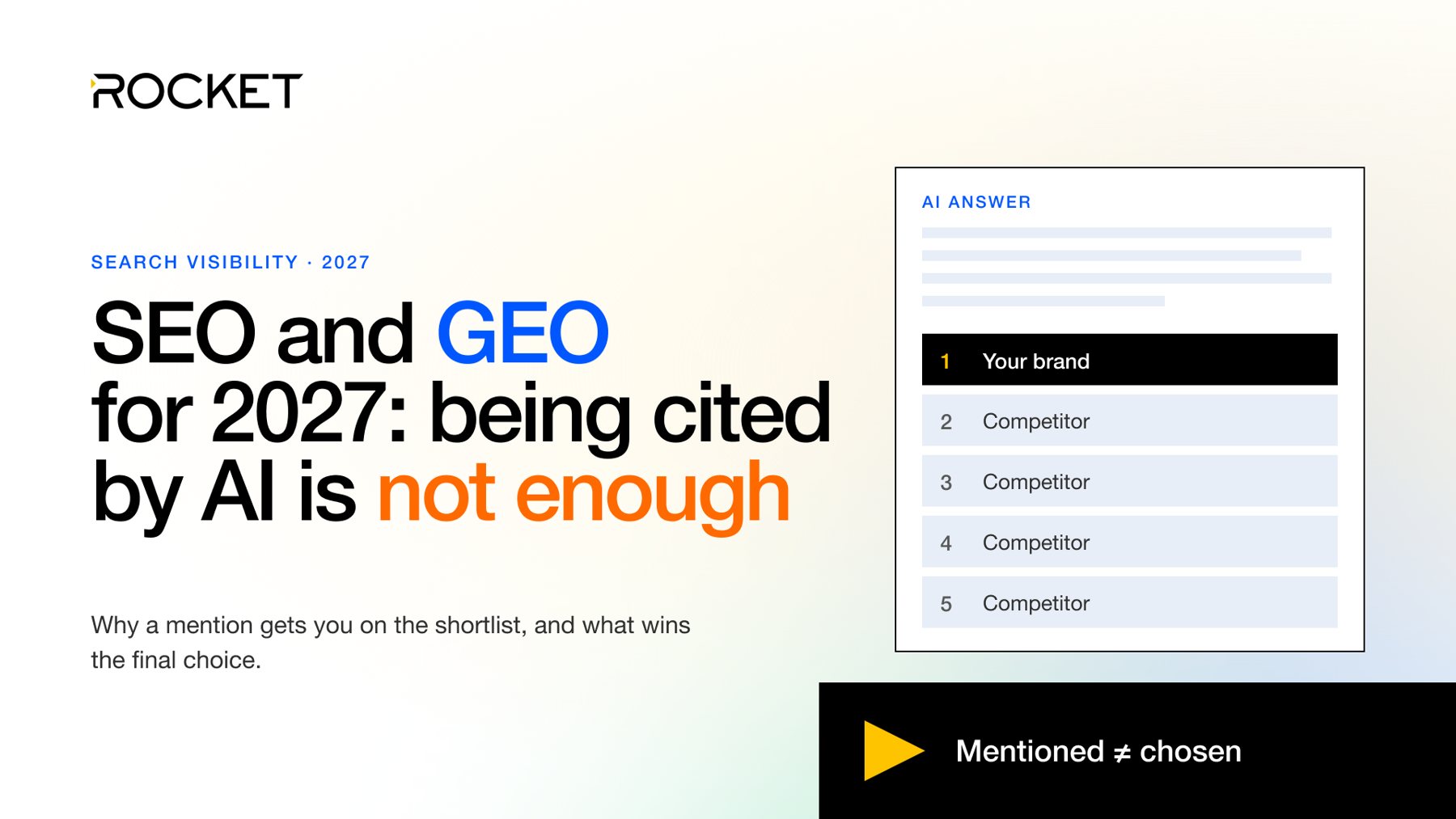
- In Rocket’s recent audits, AI answers listed up to five competitors alongside the brand. Being cited gets a brand into the conversation, not necessarily chosen.
- Our recommendation: plan search page by page, with SEO as the foundation, GEO to earn citations, advertising to secure key positions, and brand-building content to win the final choice.
For marketing teams preparing their 2027 plans, the question is shifting from “where do we rank?” to where do we appear across the whole results page and inside AI answers, and who appears next to us?
This article looks at how search behavior in Vietnam is changing and what research says about AI Overviews and clicks. It also explains how Rocket Group combines SEO, GEO and search ads, so brands create their own visibility instead of waiting for AI to choose them.
How Customers in Vietnam Search Now
Vietnamese users have embraced AI without leaving Google. According to StatCounter data compiled by TopOnSeek, Google accounted for about 94% of search engine referrals in Vietnam between August and October 2026. Cốc Cốc was second at around 5%. Meanwhile, Decision Lab’s Connected Consumer H1 2026 survey of 1,477 online consumers found that 92% had used at least one AI tool. ChatGPT led at 67%, while Gemini, at 58%, was gaining ground.
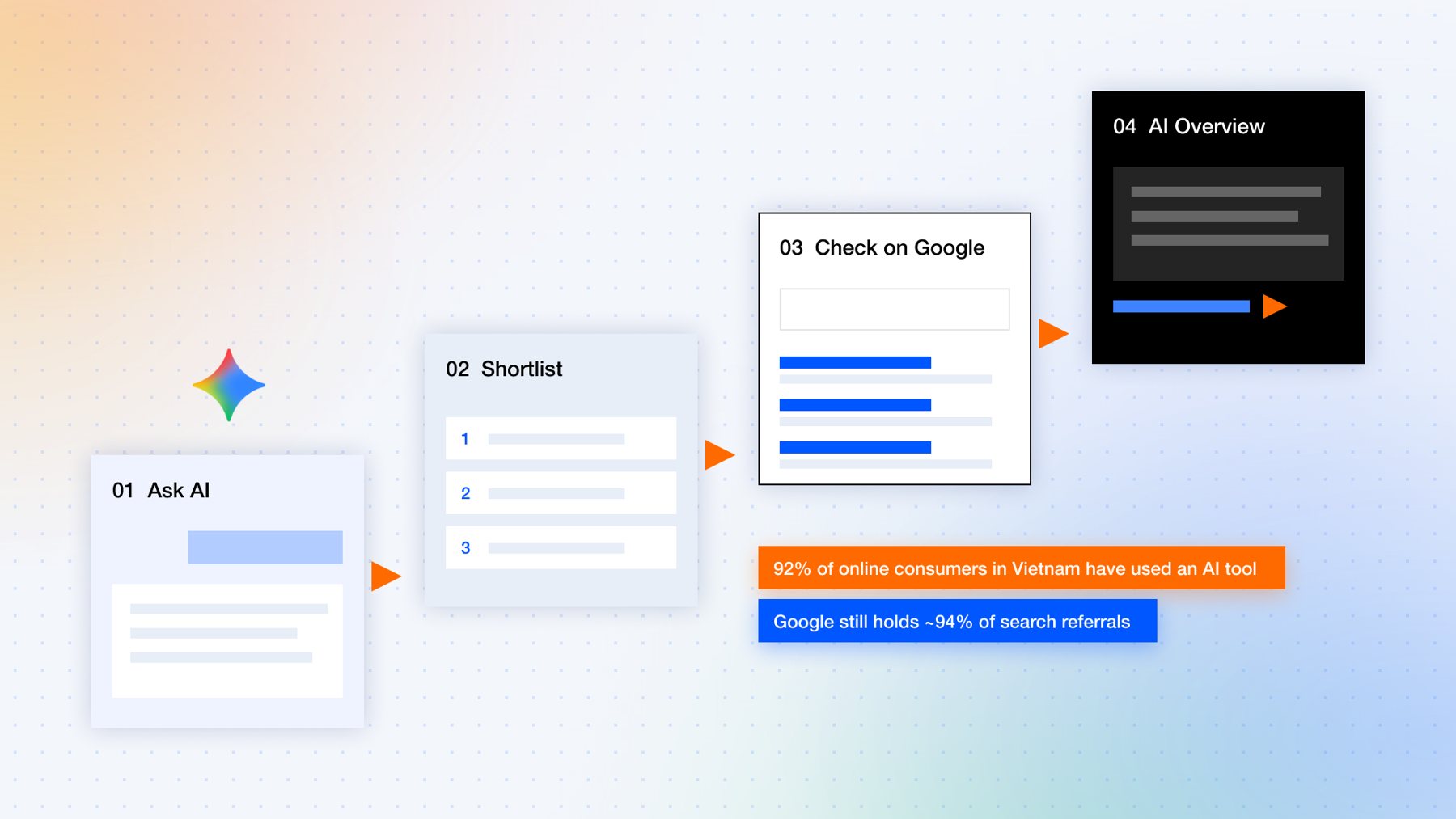
What has changed is the journey. Customers often use ChatGPT or Gemini to understand a problem and build a shortlist. They then return to Google to check prices, locations or reviews. Even there, AI Overviews and AI Mode, both now available in Vietnamese, show an AI-written answer before the brand’s own listing.
For brands, this adds a new measure alongside rankings: does the brand appear in AI answers to the key questions in its category, and next to which competitors? A practical first step is to ask ChatGPT, Gemini and Google AI Mode the 20 questions customers ask most often. Then record which brands are named and which pages are cited.
SEO, AIO and GEO: Three Layers of Search Visibility
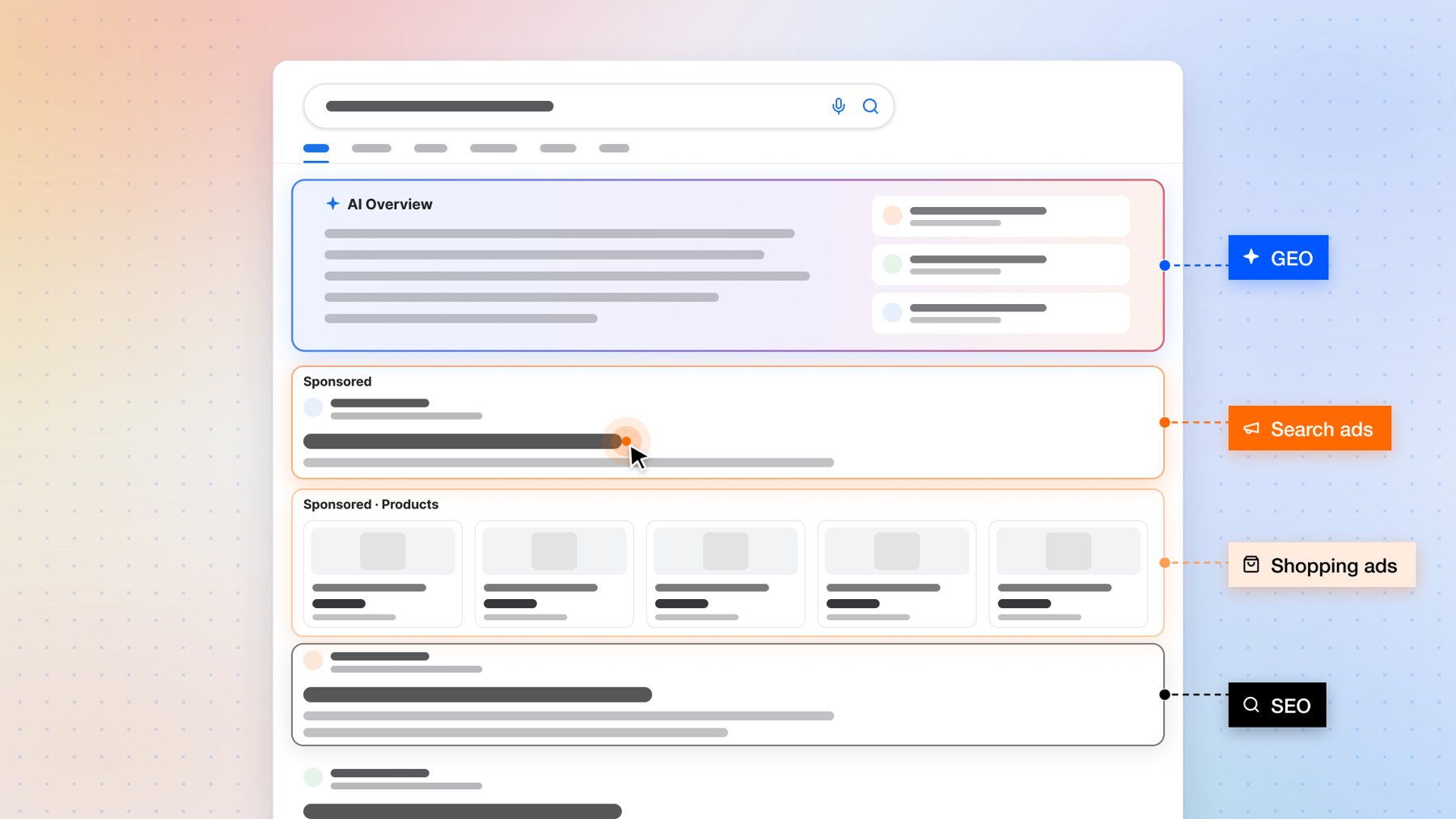
Rocket Group plans search visibility as three connected layers, with SEO at the core. In practice the layers overlap, but separating them helps set objectives and KPIs:
- SEO: Google can find, understand and rank the website. Success is measured by rankings, clicks and CTR.
- AIO (AI Overviews and AI Mode): Google’s AI features select the page as a source. Search Console now includes a Generative AI features report, currently in beta, that shows impressions in these features.
- GEO (generative engine optimization): platforms such as ChatGPT, Gemini, Perplexity, Claude and Copilot cite or mention the brand. Visibility is tracked through a recurring set of test questions and AI referral traffic in GA4.
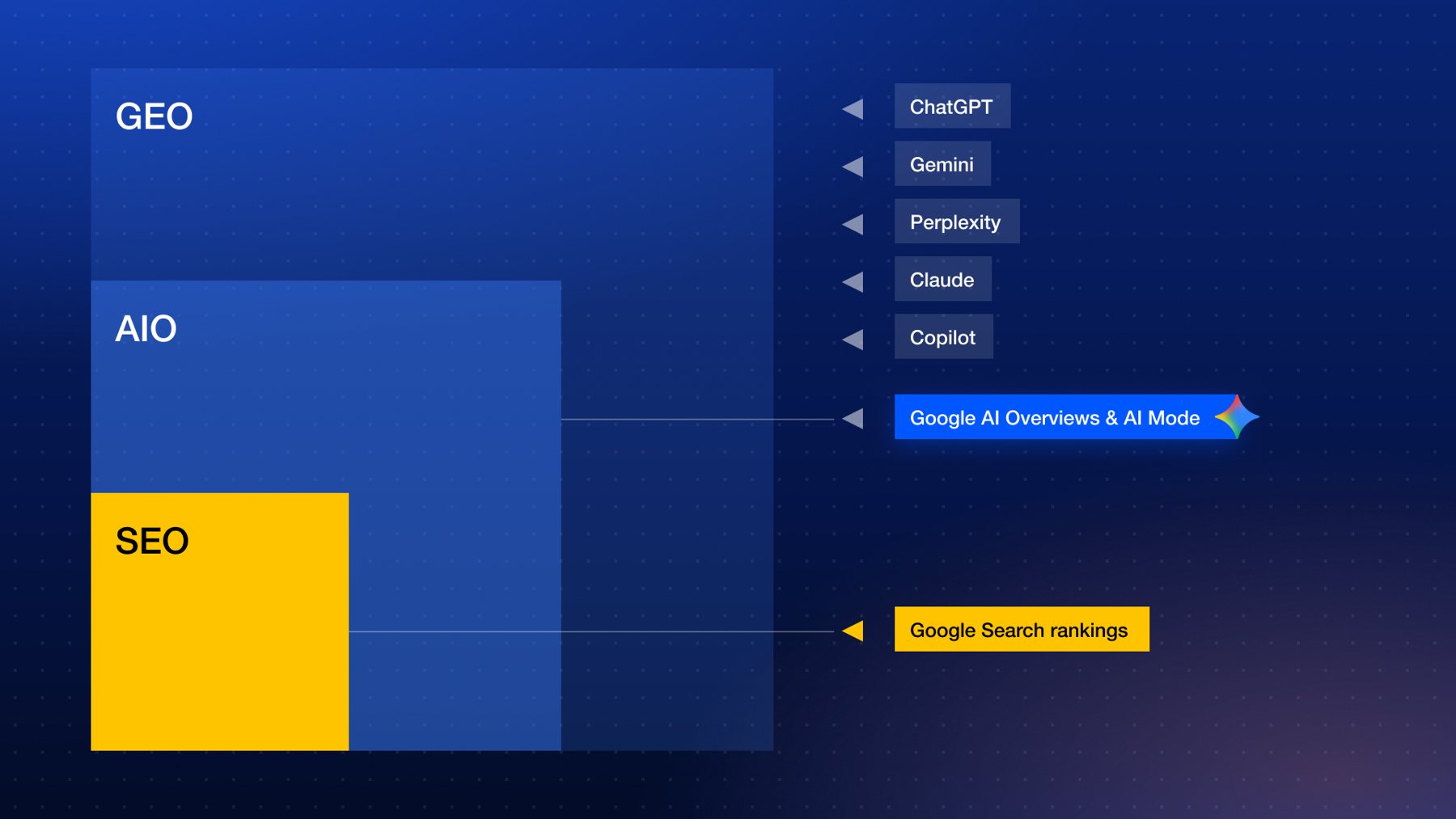
GEO depends on SEO. When AI tools need fresh information, they search the web first and pick a few pages as sources. In Rocket’s projects, the websites AI cites consistently usually already rank well for the same keyword group. That is why we review the SEO foundation before recommending GEO. This includes technical health and whether robots.txt allows AI search crawlers.
Within AI answers, brands gain visibility in two ways. A citation links to the brand’s own website, so the brand controls the wording AI uses and can measure the traffic. A mention names the brand based on press coverage, reviews, forums or comparison sites. Mentions add third-party credibility, but the brand has less control over how it is described. Both matter, and citation is usually the priority for brands that can publish content consistently.
What AI Overviews Mean for Clicks
Several independent studies, using different methods, point in the same direction. Ahrefs analyzed 300,000 keywords, comparing December 2023 with December 2025. It found that an AI Overview correlated with a 58% lower average desktop CTR for the top-ranking page. Pages in second position saw a drop of about 51%. Ahrefs presents this as a correlation rather than proof of cause.
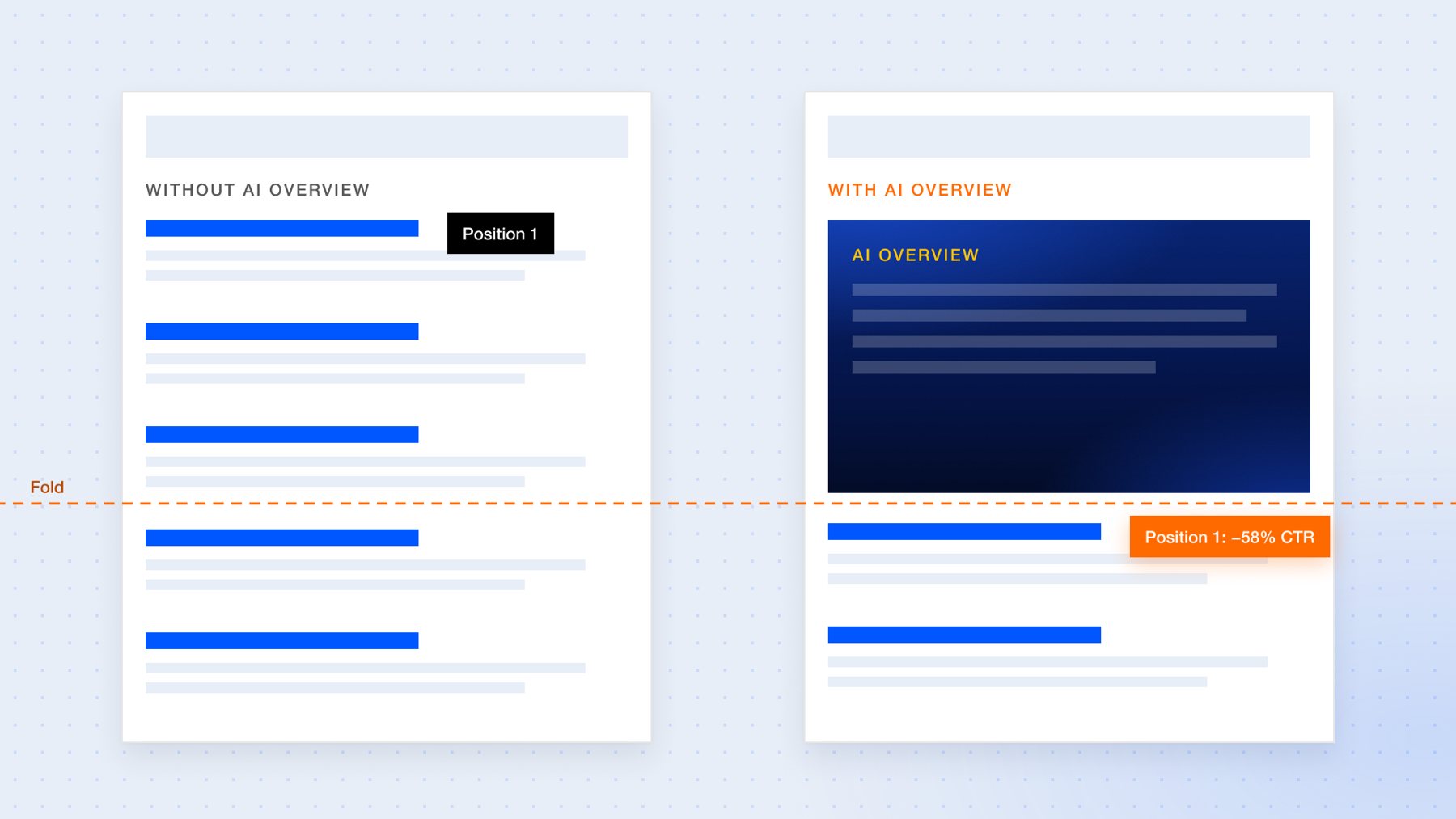
User behavior data tells a similar story. Pew Research Center found that US users clicked a traditional search result in 8% of visits when an AI summary appeared, compared with 15% when it did not.
The picture is not purely negative. Seer Interactive’s 2026 update found that brands cited in AI Overviews earned higher organic and paid CTRs than brands that were not. Seer cautions, however, that stronger brands may simply be more likely to be cited. It also reported that paid CTR on pages with AI Overviews rose from about 14.6% to 16.2% between January 2025 and February 2026. On pages without them, paid CTR fell from about 26% to 21.8%. The same update points to early signs that organic CTR is stabilizing.
No public study has yet measured these effects on Vietnamese-language Google results. In our view, the direction is likely to be similar now that AI Overviews and AI Mode support Vietnamese. Still, brands should measure their own data rather than wait for an industry benchmark. Three steps help:
- Use Search Console’s Generative AI features report to set a baseline for AI impressions.
- Shift SEO reporting from rankings alone to clicks and presence across the results page, including AI Overviews.
- Split ad CTR by keyword groups with and without AI Overviews to see where advertising works hardest.
Mentioned Is Not Chosen: What Rocket’s Audits Show
To see what Vietnamese users actually encounter, Rocket built Rocket Search Intelligence. This in-house tool captures the full Google results page for each keyword: ads, organic results, product listings, maps, AI Overviews and the pages they cite. Pages load in a real browser, so the data reflects what users in Vietnam see.
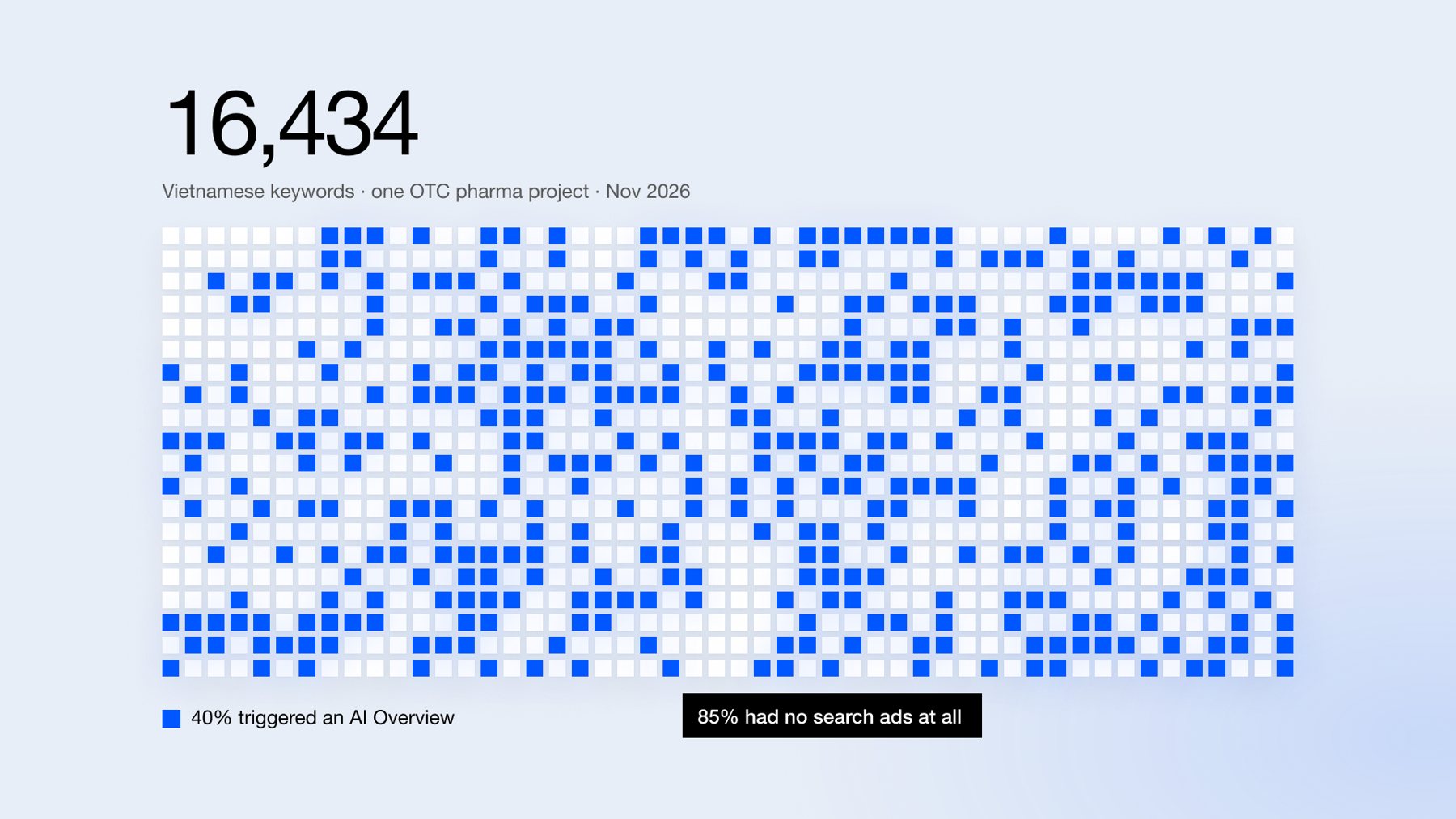
One anonymized OTC pharmaceutical project covered 16,434 Vietnamese keywords in November 2026. Of these, 40% triggered an AI Overview, while about 85% had no search ads at all. The most active advertisers were pharmacy chains and private hospitals rather than direct competitors. These figures come from a single crawl and vary by date, device and location. Even so, they show how different the competition looks once the whole page is visible.
AI answers present a shortlist, not a winner
Rocket’s tests for Nam Dinh Vu Industrial Park show the pattern. Namdinhvu.com ranked first on Google and was cited in the AI Overview. ChatGPT also named it first for a query about renting industrial land in Hai Phong, yet listed other industrial parks in the same answer for comparison. Similar tests for Bay Viet Flight Training placed the school first for two admissions questions, with another academy right below. Across Rocket’s recent audits, AI answers listed up to five competitors alongside the target brand. Positions also shifted with wording and over time.
The lesson is that citation earns a place on the shortlist, not the final decision. Customers still compare, and they choose the brand they already know and trust. GEO can show measurable results within a few months when the SEO foundation is in place. In one Rocket project, AI feature impressions in Search Console rose noticeably from mid-September 2026. Turning that visibility into preference, however, requires GEO to work alongside advertising and brand-building. For pharmaceutical and health supplement brands, content must also comply with health product advertising rules. GEO in these categories therefore needs medical and legal review and usually takes longer.
Planning Search by Results Page: Rocket’s Proposed Approach
With a fixed budget, the question is where a brand should appear to create the greatest impact. Rocket Group proposes planning search around three layers of understanding:
- Market: who occupies the results page, who buys ads and who AI cites.
- Display: which features appear for each keyword group, and where the brand sits among them.
- Customer: what people ask, on which platform, and at which stage of the journey.
Rocket Search Intelligence then turns this into an allocation plan.
| Results page shows | Lead channel | Supporting channel | What to track |
|---|---|---|---|
| AI Overview, few or no ads | GEO | SEO; ads to enter before competitors | Citation rate, AI impressions |
| AI Overview and many ads | GEO + search ads | SEO | Ad CTR when the brand is cited |
| Product listings, retailers | Shopping ads | Retail partnerships | Cost per order, impression share |
| Organic results only | SEO | GEO for related questions | Rankings, clicks |
| Brand keywords | SEO + ads | Brand content on external sources | How AI describes the brand, impression share |
Putting the plan to work
In practice, this helps brands find gaps, such as question-led keywords with AI Overviews but no advertisers. It also shows where competitors and retailers already pay, so spend can be concentrated there. Content and media teams gain a shared view of which competitors AI names beside the brand, which helps them differentiate messaging. Because results pages and AI answers change constantly, the plan should be refreshed monthly.
ChatGPT Ads, open in Vietnam since September 23, 2026, add a paid option inside an AI environment. In our view, they are most useful once a brand knows how AI already describes it and where GEO does not yet reach.
A three-step roadmap for 2027
For 2027, we suggest three steps, each with a condition for moving on rather than a fixed timetable:
- Understand the results page: map keywords by results-page features, test priority questions in AI tools and set a Search Console baseline.
- Build the SEO and GEO foundation: answer priority questions directly, add structured data, align brand information across external sources, and run ads on high-competition keywords.
- Scale across channels: expand when AI impressions, citations and search conversions are rising together.
Frequently Asked Questions About SEO and GEO
What is the difference between SEO and GEO?
SEO helps a website rank and earn clicks in search results. GEO aims to have AI platforms such as ChatGPT and Gemini cite or mention the brand, and describe it accurately. The two are linked, because AI tools usually draw on pages that already rank well.
Do AI Overviews reduce website traffic?
Studies in English-language markets associate AI Overviews with substantially fewer clicks on top organic results, including a 58% drop for the top position in Ahrefs’ analysis. Vietnamese-language data is not yet public, so brands should track the impact in their own Search Console.
Is being cited by AI enough?
No. AI answers often present several options, and Rocket’s audits found up to five competitors listed alongside the target brand. Citation gets the brand on the shortlist; awareness, advertising and trust influence the final choice.
How can brands measure GEO performance?
Track citation and mention rates across a fixed set of customer questions, AI impressions in Search Console’s Generative AI features report, and referral traffic from AI chatbots in GA4. Review these monthly alongside organic clicks.
Should brands still invest in search ads?
Yes, selectively. Seer Interactive’s data shows paid CTR rising on pages with AI Overviews, and ads help brands secure positions on important queries that GEO alone cannot guarantee.
Where does your brand stand in AI answers today? Rocket Group can start with a scan of your category’s keywords and AI answers, then build a search plan that combines SEO, GEO and search advertising.
Sources
- AI and search engine market share in Vietnam and worldwide — TopOnSeek, StatCounter data, updated November 5, 2026
- Người Việt ngày càng “sống cùng” AI — Thương Trường, citing Decision Lab, The Connected Consumer H1 2026, November 3, 2026
- Update: AI Overviews Reduce Clicks by 58% — Ahrefs, February 4, 2026
- Google users are less likely to click on links when an AI summary appears in the results — Pew Research Center, July 22, 2025
- AIO Impact on Google CTR: 2026 Update — Seer Interactive, April 24, 2026
- ChatGPT ads expands to Southeast Asia and Taiwan — OpenAI, September 23, 2026
- Rocket Search Intelligence, internal project data, November 2026. —
Want this applied to your brand?
Tell us the problem. We come back with a point of view, a scope and a number — usually within two working days.